Private Pilot Certification
Private Pilot Certification
Private Pilot Certification

This is the Beginning. Start with no experience and take off with the ability to pilot your own aircraft. Learn what it takes to become a pilot, including essential knowledge about weather, aerodynamics, systems, airspace, and regulations. Whether you're aiming for private pilot certification, seeking an instrument rating, or working towards commercial certification, the most important skill to master is 'FLYING.'
Instrument Rating
Private Pilot Certification
Private Pilot Certification

Is the weather getting you down? Can't see? It's time to get your Instrument Rating. With this certification, you can fly even when the weather turns challenging. While you won't be able to fly in all conditions, learning how to navigate through the clouds with your IFR rating will empower you. Plus, if you're aiming for a commercial certification, this is a crucial step. Don’t just fly around the weather; learn to fly through it.
Commercial Certification
Private Pilot Certification

Want to get paid for flying? You’ll need a Commercial certification for that. Understand the rules for compensation and work towards obtaining your private pilot certification. Additionally, mastering more advanced maneuvers and getting your instrument rating will help you on your journey to becoming a paid pilot.
Training Aircraft
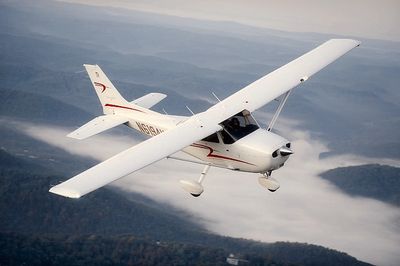
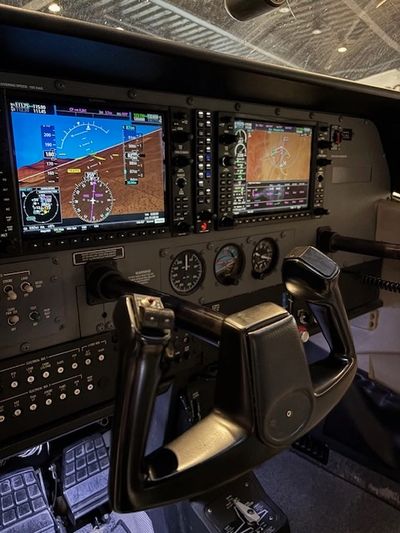
I have 2 aircraft available for training that can help you achieve your commercial certification, instrument rating, or private pilot certification. I have a Pipistrel Alpha Trainer equipped with the latest Garmin G3X full glass cockpit. The Piper Archer offers a more traditional experience, featuring a combination of steam gauges and GPS.
Affordable Flight Training
I believe that flight training should be accessible to everyone, which is why we offer competitive pricing and a variety of payment plans to fit your budget. With our affordable training options, you can work towards your private pilot certification, obtain your instrument rating, and even pursue your commercial certification, all while achieving your dream of becoming a pilot.
Need an IPC or Flight Review
Need that IPC or bi-annual flight review for your commercial certification? Multiple options are available. I can provide the aircraft or come to you in your aircraft. Stay current, review new policies, and brush up on maneuvers for your instrument rating or private pilot certification. Let's have fun!
What does it Cost for your Private PIlot
Here are the requirements to earn your private pilot certification per the FAA.
- You need a total of 40 flight hours, which must include:
- 20 hours of flight training, 10 hours of solo flight training,
- 5 hours of solo cross-country training, and one solo cross-country flight of at least 150 nautical miles, with landings at three different airports, including one leg with a minimum straight-line distance of 50 nautical miles between stops.
- Additionally, you must complete 3 takeoffs and landings at a towered airport.
- 3 hours of night flight training
- 10 takeoffs and full stop landings at night, as well as 3 hours of simulated instrument training.
These minimums are required by the FAA for part 61 flight schools. On average, students working towards their private pilot certification take about 60 to 70 hours to complete their training. While it is possible to complete the training in less time, it is not common.
As of April 2026, here is the current cost breakdown based on 60 hours of flight training:
- Aircraft rental for 60 hours at $200 per hour equals $12,000.
- Instruction, which includes 60 hours of flight and 20 hours of ground time at $40 per hour, totals $3,200.
- Miscellaneous costs, including flight gear and subscriptions, average around $1,000.
- Flight insurance is approximately $500 per year.
- Testing fees for the oral, written, and practical tests total about $1,200.
The total approximate cost comes to $17,900. This is an investment in your future, especially if you plan to pursue a commercial certification or an instrument rating later on. It requires both time and dedication.
What does it cost for your Instrument Rating
What is Instrument Flight? Essentially, it involves using instruments for flight, enabling pilots to operate safely in adverse weather conditions such as clouds and decreased visibility. This method ensures a secure way to fly, especially when visibility is compromised.
Similar to the private pilot certification, obtaining an instrument rating is an additional qualification that pilots can add to their Private Pilot License.
What does it take to achieve this certification? Here are the requirements set forth by the FAA:
- 40 Hours of Actual or Simulated Instrument Flight
- 10 Hours of PIC Cross Country in Airplanes
- 15 Hours of Actual or Simulated Flight in an Airplane
- One 250NM Instrument Cross Country Training with an Instrument Approach at each airport, and 3 different approaches flown
- 20 Hours of Instruction in an Airplane
- 50 Hours PIC Cross Country - Prior to Testing - May include Private Pilot Flight Hours
These represent the minimum hours required to obtain your instrument rating; however, the average pilot typically logs about 60 hours.
Now, let’s discuss the costs associated with this commercial certification based on average time:
- Aircraft rental for 50 hours at $200 per hour = $10,000
- Instruction for 50 hours Flight and 20 hours Ground at $40 per hour = $2,800
- Testing (Written, Oral, Practical) = $1,200
- Total Cost Approx. = $14,000
What do you need to become a Commercial Pilot
What it takes to become a commercial pilot per the FAA for your commercial certification requires a total of 250 hours of flight time, which includes the following:
- 100 hours in powered aircraft, 50 hours in airplanes, and 100 hours of Pilot-in-Command (PIC) time.
- Among these, you will need 50 hours of PIC time in airplanes, 50 hours of PIC cross-country flying, and 10 hours of PIC cross-country in airplanes.
- Additionally, 20 hours of flight training is essential, including 10 hours of simulated instrument training, with 5 hours specifically in single-engine airplanes.
- You also need to log 10 hours in a complex, turbine, or technically advanced aircraft (TAA), or any combination thereof.
- For cross-country requirements, you must complete a 1 to 2-hour day flight greater than 100 nautical miles and a 1 to 2-hour night flight of at least 100 nautical miles.
- Solo flying is crucial as well, requiring 10 hours of solo flight time and 5 hours of night flying under VFR conditions.
- Finally, you need to perform 10 takeoffs and landings at a towered airport.
It may seem like a lot of hours, and it is. However, this time includes your flight hours for private pilot certification and instrument rating, along with any personal flying you do.
What does it cost? Again, it varies.
